

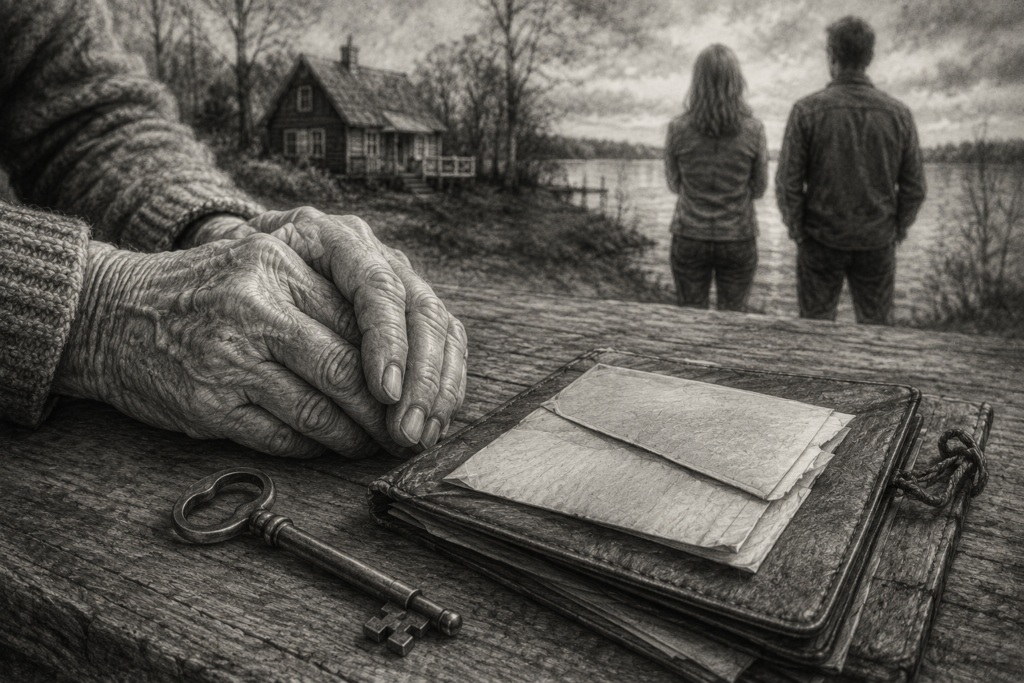
Most people assume that once they sign a will, their wishes are settled.
But what happens if the original will can’t be found after they pass away?
A recent Michigan Court of Appeals decision, Dunn v. Hughes (In re Hughes Estate), reminds us that simply having a copy of a will may not be enough. Under Michigan law, when an original will cannot be located after someone’s death, the law may presume that the person intentionally destroyed it and revoked it.
That can completely change how an estate is distributed.
Why This Matters
In this case, a man died, and his sister opened his estate as though he had no will.
A few days later, another individual asked the probate court to admit what he claimed was a copy of the decedent’s will. He testified that the original had been entrusted to him for safekeeping but was destroyed when his home burned down. He also produced an electronic copy that appeared to contain the signatures of the decedent, two witnesses, and a notary.
That sounds convincing at first.
But Michigan law has an important rule.
If an original will was last known to be in the possession or control of the person who made it, and the original cannot be found after that person’s death, the law creates a presumption that the person intentionally destroyed the will because they wanted to revoke it. That presumption can be overcome, but only with credible evidence.
The probate court carefully considered the testimony and found that the evidence simply wasn’t strong enough.
There were unanswered questions about where the electronic copy came from. The witness’s testimony about who prepared the will conflicted with the attorney’s own statement in court. The trial judge also evaluated the credibility of the witnesses and found the circumstances surrounding the copy were not persuasive enough to overcome Michigan’s presumption of revocation.
The Michigan Court of Appeals agreed and affirmed the decision. As a result, the estate was administered as though there were no valid will.
For families, this case carries several practical lessons.
First, where your original will is kept matters. If no one can locate it after your death, your loved ones may face an uphill legal battle trying to prove that a copy should be honored.
Second, it’s important that trusted family members know where your original estate planning papers are located. Even the best-written plan cannot help if no one can find it when it is needed.
Finally, this case reminds us that probate courts decide cases based on evidence, not assumptions. A photocopy or electronic copy may raise important questions, but it does not automatically replace the original.
Simple Lesson
A carefully prepared estate plan is only effective if the original can be found when your family needs it most.
Action Step
Take a few minutes to confirm where your original will is being kept. Make sure your personal representative or a trusted family member knows how to locate it, and if you have moved, changed attorneys, or are unsure where the original is, now is a good time to review your plan.
If you’d like to talk about your estate plan or long-term care planning, we’re always happy to help. Call us at (517) 548-7400 or reach out through our website.