
“Not until we are lost do we begin to understand ourselves.” – Henry David Thoreau
Remember the old TVs? They were square, with thick glass screens wrapped in woodgrain plastic, rabbit ears on top, clunky dials you had to click. Barely bigger than a microwave, but weighed as much as a bag of cement.
My parents, brothers, and I used to crowd around one of those TVs to watch Gilligan’s Island.
We tuned in for the laughs. Gilligan bumbling things up, the Skipper yelled, the Professor made a radio out of bamboo – it was fun. But they were always stuck. Week after week, no matter how close they got to getting off the island, something always went wrong.
What strikes me now is this: the Professor could build a washing machine out of coconuts but couldn’t patch a hole in a boat? They had visitors – a pilot, explorers, even mad scientists – but no one could radio for help?
As a kid, that was frustrating. Come on! Just fix the radio. Flag down the passing ship! I figured they must’ve been the unluckiest people on earth.
But now, I wonder: what if it wasn’t bad luck?
What if they didn’t want to leave?
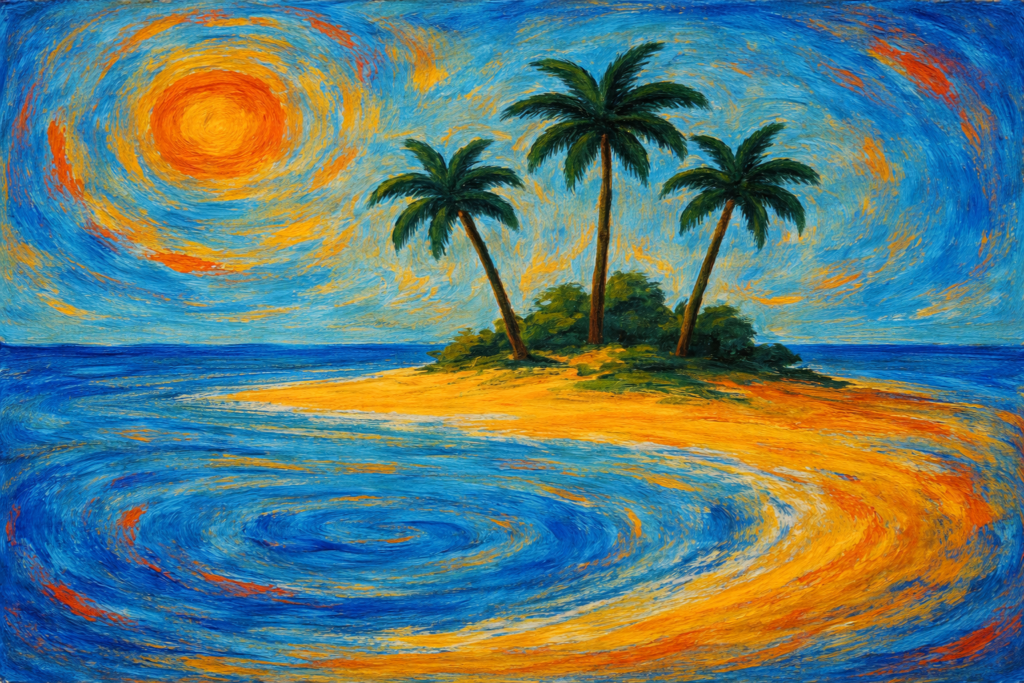
Think about it. The island had everything they needed – shelter, food, and community. And all of it wrapped in sunshine, turquoise water, and soft white sand.
Nobody was climbing the corporate ladder. Nobody was stuck in traffic. Nobody was peeking over the neighbor’s fence trying to measure up (that era’s version of today’s social media).
Maybe, in a strange way, the island was the rescue.
They started as castaways, but over time, they built a life. Ginger found her audience. The Professor had endless experiments. The Skipper no longer had a ship, but he still had a crew to keep in line.
The Howells – rich and pampered – learned how to pitch in (well, sort of). Mary Ann was the bridge between the big personalities, keeping things grounded. And Gilligan? He was exactly who he’d always been – on or off the island.
Their lives became more than survival – not perfect, but living all the same.
Life has a way of crashing us onto islands. Not literal ones, but places where things didn’t go as planned. Maybe it’s not the job we thought we’d have, or the place we thought we’d live, or the timeline we imagined. It can feel like we’ve been thrown off course.
But what if we haven’t?
What if this is where we figure things out, where we meet the people who matter, and where we become more fully ourselves?
Not every detour is a dream come true. Some are hard. Some are lonely. But maybe the goal isn’t always to return to where we were. Maybe the goal is to notice where we are – and see what might grow there.
The castaways never got off the island. And somehow, that didn’t ruin the story. In fact, it was the story. They learned how to live, together, in a world they didn’t choose – but one they came to shape.
So maybe the lesson isn’t about escape. Maybe it’s about presence. About finding meaning right where we are – even if it wasn’t part of the plan.
So here’s to our islands. The unexpected ones. The unplanned ones. They just might be where the real story begins.